Real pipeline
Stages, advancement criteria, probability, sources and next steps.
We design and govern your B2B sales process on Zoho CRM: pipeline, follow-up and forecast with evidence — connected to CFDI invoicing and margin control. Always with a human in command.
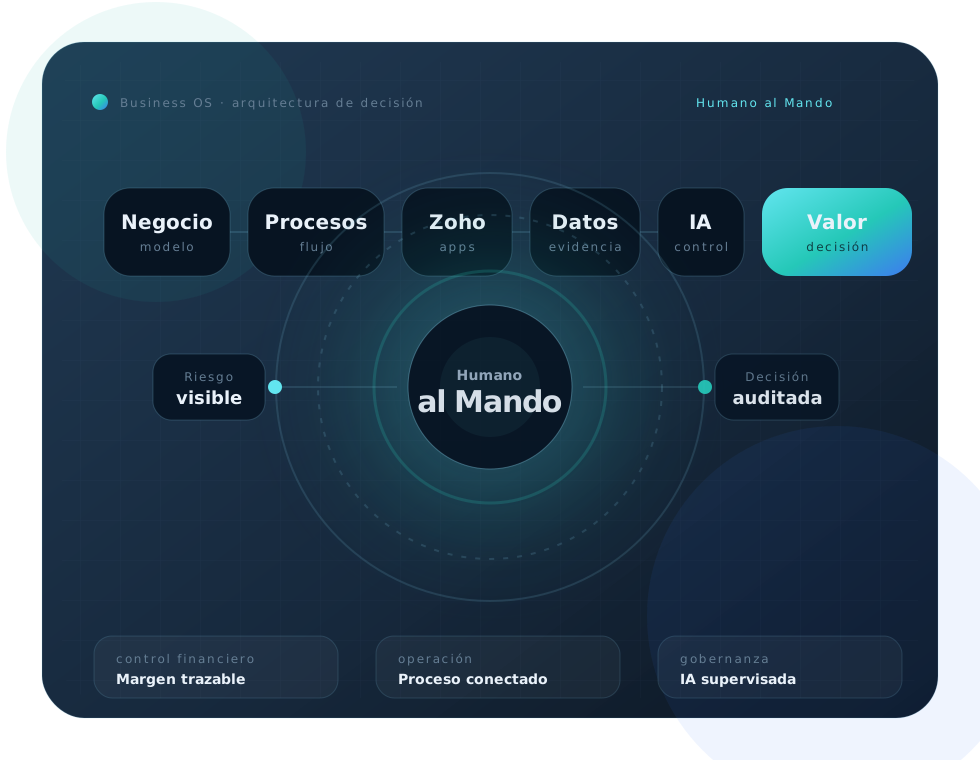
Before creating fields or modules, we define how the company sells, what it needs to measure and what decisions the CRM must enable.
Stages, advancement criteria, probability, sources and next steps.
Alerts, tasks and cadence for stalled opportunities.
Dashboards for sales leadership, management and operations.
Usable design, clear rules and training tied to the real process.
The objective is not to fill Zoho CRM with fields. It is to build a system that helps sell, prioritize and decide with evidence.
More consistent data for sales meetings.
Unfollowed opportunities detected earlier.
Visible cadence and responsibilities.
Actionable information for sales and leadership.
A Zoho CRM implementation in Mexico is the design of the sales process — stages, advancement criteria, cadence and owners — before configuring the software. Zherpa Digital Systems, an independent business-architecture firm in Zapopan, Jalisco, implements Zoho CRM with the Nautilius Method and integrates Zoho Books to connect opportunity, CFDI 4.0 and collections, with traceability and a human in command. The approved quote becomes an invoice without rework; margin stays visible per operation.
One customer record: data travels from quote to CFDI without rework.
Leadership sees profitability per quote, not just revenue.
Victory is defined at the start; indicators do not move at the end.
Real usage is measured with data: without sustained adoption there is no return.
The full sequence: Understand → Design → Implement → Automate → Govern → Improve. Each phase delivers evidence before the next one opens; the system is born governed, not improvised.
The real process, the data and the decisions the CRM must enable.
Pipeline, advancement criteria, owners and agreed KPIs.
Modules, fields, views and clean data migration.
Cadences, alerts and flows that remove data entry, not control.
Rules, permissions, traceability and a human in command.
Adoption measured at 30, 60 and 90 days, adjusted with evidence.
Zherpa Digital Systems is an independent firm: we are not an official Zoho Partner or reseller, and that protects your interest — no sales quotas, no incentive to push licenses. We implement with the Nautilius Method, created by Miguel Ángel Arce and distilled from decades of real consulting: technology is the vehicle; a system that drives sales is the result.
Of business consulting, with successes and failures as the method's raw material.
Implemented with method, not improvisation.
Inside the ecosystem, with judgment independent from the channel.
Automation and AI with limits, traceability and human oversight.
The cost has two components worth separating: licenses, contracted directly with Zoho by edition and number of users, and the implementation service, which depends on scope — processes, integrations, data and adoption. That is why we start with a diagnostic: first the system is sized, then it is quoted with clarity.
The most common cause is not the tool: it is the implementation mirage — believing that buying the software equals solving the problem. A success case requires effective implementation, sustained adoption, high-quality indicators and time. If any factor is zero, the result is zero.
It depends on scope: processes, integrations, data migration and number of areas. We work in phases so the team operates a first version soon, and we measure adoption on 30, 60 and 90 day cadences — the goal is not just going live, it is a system that keeps driving sales.
Yes. Zoho CRM integrates with Zoho Books so a won opportunity becomes quote, order and invoice without rework. CFDI 4.0 is issued from Zoho Books through an authorized PAC, with payment complements for PPD operations: one traceable flow from sale to collection, with leadership reading margin from the same source of truth.
Start with a diagnostic to identify value leaks, technology risks and the next architectural move.